Concrete surfaces play an important role in the accessibility, safety, and appearance of residential and commercial properties. Driveways support vehicles, sidewalks provide walking paths, and patios create usable outdoor spaces. When these surfaces settle unevenly, they can develop trip hazards, collect water, and create awkward transitions between adjoining areas.
Property owners considering concrete leveling in Davenport, IA, should understand why the slab has moved before deciding how to repair it. Concrete leveling addresses changes in elevation by raising suitable existing slabs toward a more even position. Unlike complete replacement, leveling can preserve usable concrete when the material remains structurally sound and the underlying problem is appropriate for correction.
Common Causes of Uneven Concrete
Concrete settlement usually involves changes in the supporting ground rather than a problem with the slab’s surface alone.
Inadequate Soil Compaction
Soil beneath a driveway or walkway must provide consistent support. If the ground was not compacted adequately during construction, it can settle under the slab’s weight and normal use.
Water Moving Beneath Concrete
Rainwater or leaking drainage lines can wash soil away from beneath a slab. As voids develop, sections lose support and sink.
Changes in Soil Moisture
Some soils change volume as their moisture content fluctuates. Repeated expansion and contraction can contribute to movement beneath concrete surfaces.
Frost Heave and Seasonal Ground Movement
In colder climates such as Davenport, freezing temperatures can cause moisture in the soil to freeze and expand. This process, known as frost heave, can push concrete slabs upward. When the ground thaws, the soil may settle unevenly, leaving sections of concrete lower than their original position. Repeated freeze-thaw cycles can contribute to ongoing slab movement.
Poor Surface Drainage
Water that collects near concrete edges can saturate the surrounding ground and contribute to erosion or settlement. Improperly positioned downspouts can make the problem worse.
A proper evaluation considers these conditions because correcting the slab without addressing the cause might not prevent future movement.
Where Concrete Leveling Is Useful
Concrete leveling is commonly considered for several types of surfaces.
A. Driveways: Sunken sections can create uneven transitions and interfere with vehicle access.
B. Sidewalks: Raised or lowered slab edges can create tripping hazards.
C. Patios: Uneven sections can make outdoor furniture unstable and allow water to collect.
D. Garage floors: Localized settlement near entrances can create difficult transitions.
E. Concrete steps and approaches: Certain settled sections may be suitable for correction, depending on their design and structural condition.
The suitability of each application depends on slab thickness, condition, access, supporting soil, and the amount of movement required.
Understanding Concrete Leveling Methods
Different leveling methods use different materials and procedures. A professional should explain which option suits the property.
Polyurethane Foam Injection
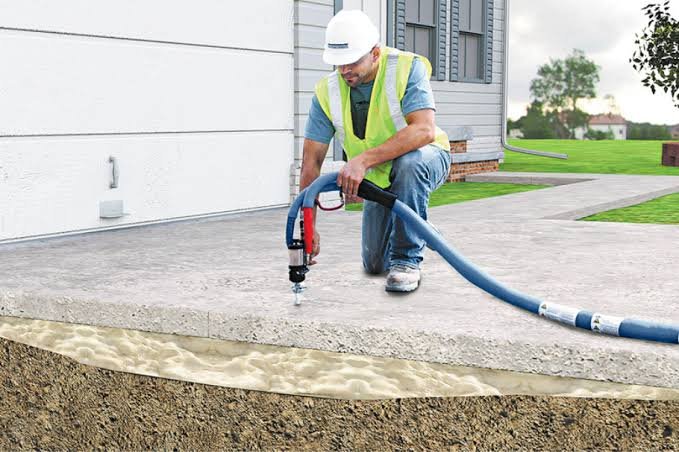
This method introduces expanding polyurethane foam beneath the concrete through small access holes. The material expands to fill suitable voids and lift the slab under controlled conditions.
The required foam, injection pattern, and lifting procedure depend on the slab and site conditions. The contractor should explain the product’s intended application and any limitations.
Cement-Based Slurry Injection
Some systems use a cement-based mixture introduced beneath the slab to fill voids and raise the concrete. The material, access requirements, and curing considerations vary by method.
Both approaches require an appropriate assessment. Neither is suitable for every damaged or unstable slab, and the correct choice depends on the property’s specific needs.
What Happens During a Concrete Leveling Project?
A professional leveling project begins with an inspection of the concrete and the surrounding ground.
Step 1: Evaluate the slab. The contractor examines settlement patterns, cracks, surface deterioration, and differences in elevation.
Step 2: Identify contributing conditions. Drainage issues, soil erosion, and other signs of inadequate support should be evaluated.
Step 3: Select the repair method. The contractor recommends a suitable lifting system based on the slab’s condition and the required correction.
Step 4: Lift the concrete. The selected material is introduced beneath the slab while its movement is monitored.
Step 5: Complete the repair. Access holes are patched, and the contractor explains any curing requirements or restrictions on using the surface.
The injection hole pattern depends on the slab’s dimensions, settlement, and selected leveling method. Contractors typically drill small, strategically positioned holes to introduce the lifting material beneath the concrete. Once the slab reaches the desired elevation, the holes are filled with a suitable patching material. These repaired spots remain visible in some cases, but they are generally small compared with the overall slab surface.
The project duration depends on the number of slabs, their condition, the selected method, and the amount of correction needed.
Return-to-Use Time: The time before a leveled surface can be used varies by method. Polyurethane foam injection generally allows faster return to service because the foam expands and hardens quickly. Cement-based slurry injection requires additional curing time before the surface can handle normal use. Exact return-to-use times depend on the products, weather conditions, and project specifications and should be confirmed with the contractor before work begins.
Concrete Leveling Versus Replacement
Leveling can be a practical option when concrete is intact enough to remain in service and the primary problem involves settlement. Preserving the slab can reduce demolition, disposal, and reconstruction requirements.
Replacement is generally more appropriate when the concrete has extensive cracking, crumbling edges, serious structural deterioration, or damage that cannot be corrected by lifting.
Concrete leveling generally costs less than complete replacement when the existing slab is structurally sound and suitable for lifting. However, the final price depends on the repair area, settlement depth, selected injection method, and underlying soil conditions. Replacement may be necessary when the slab is too deteriorated to preserve. Cost comparisons should account for the full repair scope. A low initial estimate is not necessarily the best value if it fails to address drainage problems or other conditions contributing to settlement.
Preventing Future Concrete Settlement
Although not all ground movement can be prevented, property owners can reduce certain contributing risks.
Keep gutters and downspouts functioning correctly, and direct roof runoff away from concrete edges and foundations. Correct grading problems that allow water to collect beside slabs.
Inspect concrete periodically for developing depressions, new gaps, and recurring puddles. Early investigation helps identify drainage or soil problems before they affect larger areas.
Avoid assuming that sealing visible cracks alone will correct a settlement problem. Surface sealing and slab leveling address different issues and might both be necessary in certain situations.
Make an Informed Concrete Repair Decision
Uneven concrete can affect safety, accessibility, and water management around your property. Understanding the condition of the slab and the cause of settlement helps you determine whether leveling or replacement offers the most suitable solution.
If you need concrete leveling in Davenport, IA, arrange a professional inspection and request a written estimate. Ask about the proposed method, expected results, limitations, drainage concerns, and any maintenance recommendations. A well-planned repair helps restore a more usable surface while addressing the conditions that contributed to the original problem.